
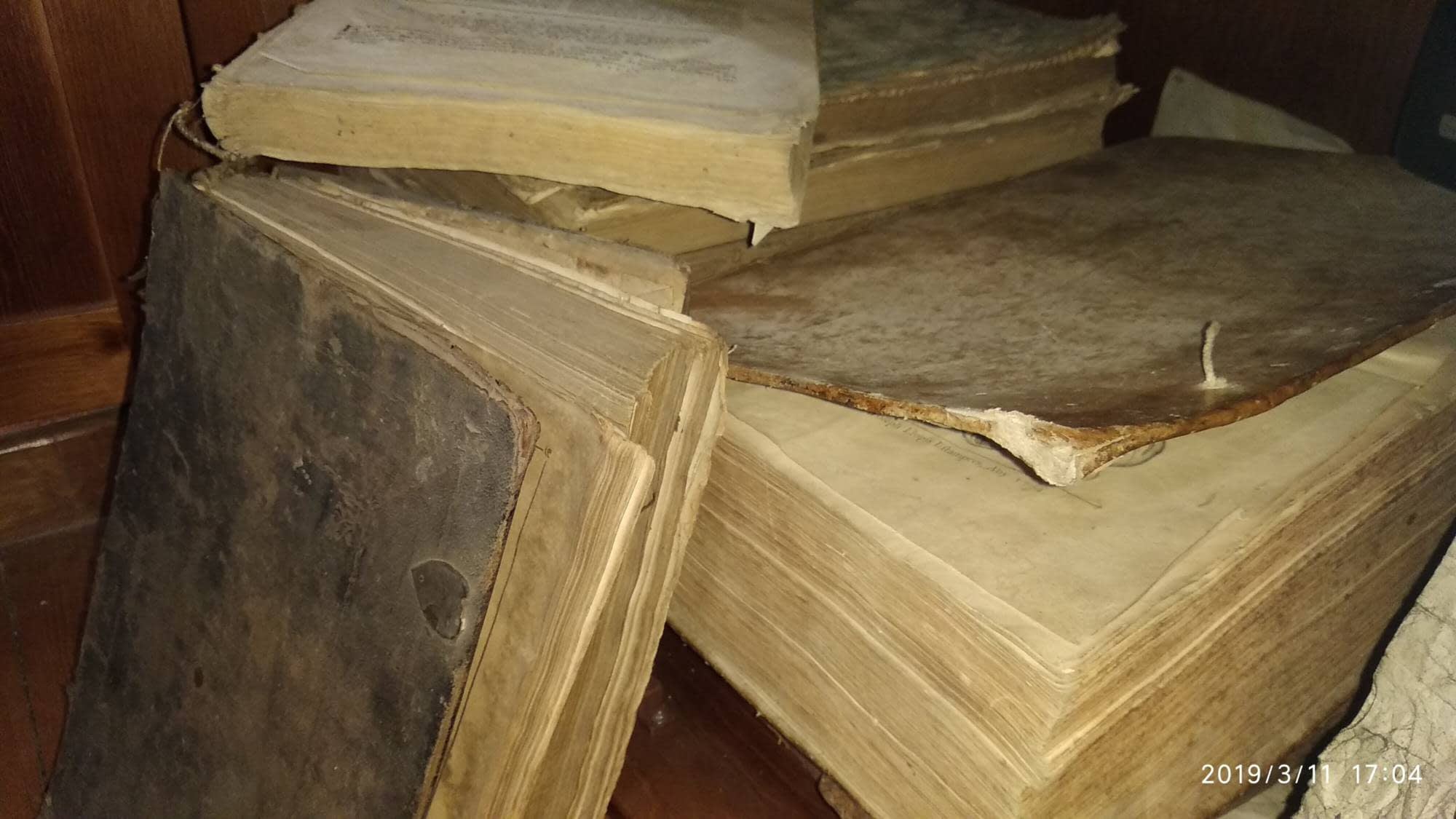
At the ‘El Call’ house in Odèn, they kept a towel belonging to the aforementioned women. Its presence in this house is explained in many ways: it fell from a woman mid-flight; it was found at the foot of the forgotten stream by the woman; it is a gift of gratitude for the constant noble welcome given by the ‘mistress’ to all the foretold women who live beneath the ‘Bassa d’Alinyà’ – the peak of Odèn mountain. Qualities attributed to the towel: drying one’s face with it prevents pimples, eczema, boils, all discharges of dirty, infected blood; no pestilential, cold, or hot bad air can affect it; in the wardrobe that guards it, no insect will ever damage clothes, and the white fabric will be a remedy for patches, plasters, and bandages. After the detailed account of the blessings bestowed upon El Call by the towel, both in terms of earthly fruits and wealth, they conclude: “the owners abandoned the house where they left the towel, the civil war came and the disturbances damaged the piece, misplaced, lost, stolen… make no mistake, El Call has ceased to exist; like a lightning-struck oak, it will stand for a few years; ‘treasure lost, house lost’.” You wouldn’t change the minds of some neighbors.
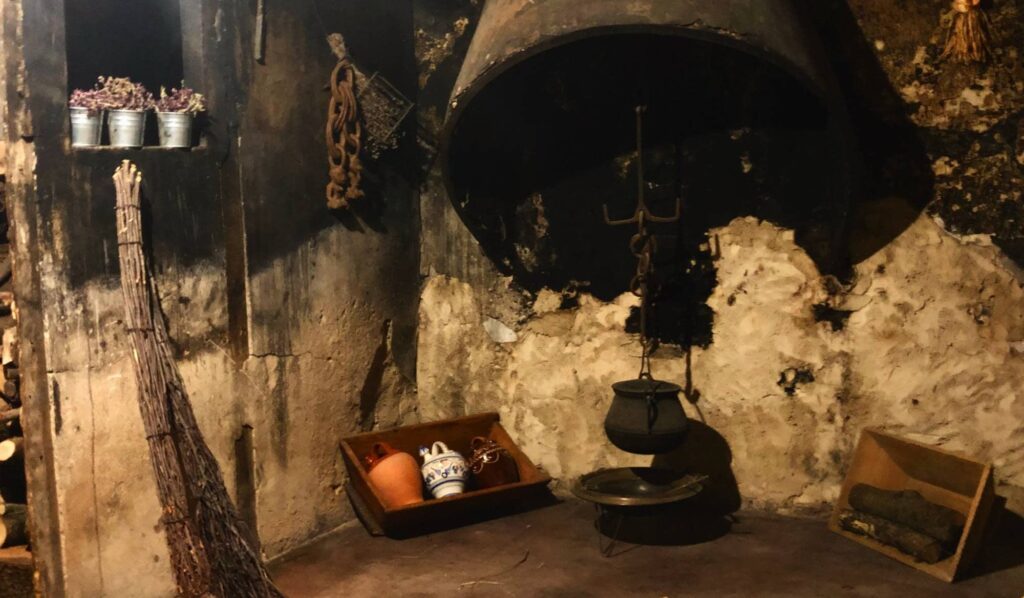
The house of El Call, located on a plateau, on a ridge of the Odèn mountain, in a privileged spot: like a viewpoint from which a large part of Catalonia can be seen, the pine forests of Solsonès are within reach, and at its feet lies the upper Ribera Salada, with all its variety of dark and dense greens of the black pine; or those brighter and clearer ones that autumn turns red, orange, and golden. A grand house where one can still sense the taste of a certain rusticity, in the living room or by the communal fire, with all the charm of a farmhouse that lived immersed in a lifestyle of great serenity and knew how to profit from the simplest things, giving them a magical and romantic air, using a language that, despite its roughness, was filled with sincerity and tenderness. A house, however, without water. It was necessary to fetch it from the spring that would later be called “the devil’s spring,” and which now flows gently, inside the entrance, at the end of a drinking trough, for anyone who wants a taste, directly or from a spout.
That blessing of water, around which the legend was born. Tired of carrying water from the spring, that young servant girl said she was fed up! All day long, up and down, laden with pitchers and buckets. That year, for the main festival of Odèn, when the sky seemed to want to roast the earth, on the Feast of the Assumption in mid-summer, the great hall of El Call was bustling with relatives and guests, and she, constantly bringing fresh water! Up the slopes and then back down the path with buckets and barrels dripping with water, also for the animals in the stables. So many mules and donkeys to water, and she, flushed with heat, her thoughts on the square, fixed on some dancing bachelor, dressed up for the party with light feet, whom she no longer even needed to think about. Not that year either. Because the water quickly ran out and she had to go up to the spring and come back down, and help make dinner, and… –Damn it, master! What would it cost him to make a channel to bring the water to the house! Up the slopes, she would go alone!– But no. The water was far away. She knew it well! She was fed up and bored of wearing down that path that prevented her from going to the gathering, to skip a few dances. All for nothing! –Damn it all!– Everyone in the square and she, constantly fetching water. As if she wanted to fill a basket that was immediately dry. Annoyed like a nest of wasps, she was aching for the dance, and she climbed like a beanstalk, furious, about to throw pitchers and buckets down the stairs. –I’m telling you what: I’d give myself to the devil to have water at my doorstep!– At that moment, someone knocks on the door and a traveler appears who, –good heavens–, also wanted water. He says his throat is parched. A ill-tempered and stern man who asks the mistress about the maid’s distress. –Nothing, man, nothing. She’s upset about the dance and grumbling because the spring is too far for her. So much so that a moment ago she was shouting that she would give herself to the devil to have water at her doorstep!– An assertion from which the girl does not back down.
She says she would gladly give herself if, before the end of the main festival, the spring’s flow reached her doorstep. –Deal!– replies the man. –Word accepted! Before the black rooster crows at dawn, you will have water inside the house!– and having uttered these words, the man leaves, saying he has a lot of work to do. This makes the two women burst into laughter, as they prepare dinner and set the table, still talking about that strange man. –A crazy passerby–, says the mistress. –If he brought water to the house, I wouldn’t let you go to the dance alone, I’d certainly accompany you!– The clatter of pots and pans on the stove. Dinner half-done, and from outside they hear a din of picks and shovels, mattocks, crowbars, rocks splitting, and mallets smashing them. The women listen intently, and it seems impossible! At the same time, the white rooster crows in the henhouse and, in the darkness of the night, a drawn-out, harsh, and rusty voice says: –Work, move forward!– They open the window to the night, lying dark and heavy, like a sweat-soaked blanket, and from the path leading to the spring, they hear the whimpering of the crowbars, the thunder of the mallets, and the groaning of splitting rocks. A great commotion under the stars that have fled the sky.
As if the world had lost its mind! Stunned by the evidence, they try to keep their thoughts calm. A herd of thoughts circles their heads, and they feel a weakness in their legs, like a slap, when the commotion in the thick darkness has awakened the henhouse. The red rooster crows, and that familiar voice, the voice of that strange man whom the maid had not even listened to when he promised to return, now cracked and even harsher, as if spitting embers of fire and making them hiss, red-hot, commands: –Let each man work for two!– It doesn’t matter, nothing matters! The earth smells damp, and inside El Call, that house that goes uphill, the two women no longer even listen to each other. They share the silence, the beating of their hearts, and the blows of the mattocks in the black hole of the night. The mistress, however, does not lose her calm and, slyly, because she feels capable of beating the devil himself, orders the maid: –Go to the henhouse, grab the black rooster, and put its head in the trough.– That rooster, black as a crow, terrified, crows prematurely and abruptly stops the devil’s work. Before, gently, the water flows into the entrance; at one end of the drinking trough, and today through an artistic, cast-iron tap, which Pep Call, the current owner, brought from Italy. A tap crafted with a head between a dragon and a strange, terrifying beast. Like a snapshot of the expression the devil must have made upon seeing himself defeated.
Let the white crow, let the red crow, as long as the black one doesn’t. In one of the inner rooms of the “Moorish holes” – Canalda – where the bustle of men does not reach and the flame of the torch that illuminates the path is very difficult, having gained the narrow corridor, you enter a large room and a few steps, do you see a narrow plank leading to new rooms and crossing a dark green-glaucous-black pool of water? And on the right plank, motionless, the mistress of El Call, enchanted? petrified? turned into a stalactite? People ask, astonished, the reason for the punishment. Some claim she broke her promise of marriage to the R. of Canalda, and lost her jewels; did she keep them? Others say she was completely innocent, she was just a confidante of a woman of smoke and water, who, angered by the future marriage, brought her to her cove; others assure that she had always been a woman of smoke and water, who captivated the heir of El Call with her beauty and, tired of household chores, abandoned her husband and children; she wished to return to the cove with her companions, but they punished her to remain planted on the plank and never enter the magical COVAL again, nor run through Ribera Salada until someone disenchanted her.
They have tried, but the flame of the torches always goes out; walking on the narrow plank frightens the bravest, and although the rumor ends like a soft whistle, a sound like the pronunciation of a very long ‘ssssss’, it bewilders everyone and people look compassionately at the standing image, on the fateful plank…
There was a family whose wife, everyone knew, was made of smoke and water. The truth is that every night the mistress and her daughter would anoint themselves with an oil kept under the hearthstone, and then pass through the chimney, melting into the black shadows of the night. One day, the new farmhand, who saw a light in the hearth every night at midnight, was intrigued and wanted to know what was happening. He waits hidden until midnight and sees the mistress and her daughter slowly arrive, anoint themselves, climb into the chimney, and disappear into the darkness of the night. He also wants to try it. He is afraid, so he ties himself to the chest-bench and anoints himself. Once anointed, he passes through the chimney with the chest-bench without realizing it and falls into the deep valley of Isanta. Bruised from the fall, he returns home and tells his master what happened, who is unaware of his wife’s nocturnal escapades. When the daughter was of marriageable age, they married her to El Call d’Odèn; on her wedding day, she tells her husband: “never, ever, no matter how angry you are, will you call me: woman of smoke and water.” Some years pass; one day the spouses have a quarrel, and in anger, the man retorts to his wife’s face: “you wouldn’t be a woman of smoke and water anymore.” Like a fragile breath, the woman vanishes, and days and days pass without any news of her. One day, when the daughters were tending a flock of sheep, she appears to them, combs their hair, tidies them up, forbids them to tell their father, and then vanishes. The first time they keep silent; the next day she appears to them again, and the third time they tell, and say that while she combs their hair, they must sew their skirts. Docilely, the girls begin to sew their skirts to their mother’s; she warns, inflamed, and cries: “you will never see me again.” The mother vanishes, and the daughters run like tormented souls to the threshold of their house.
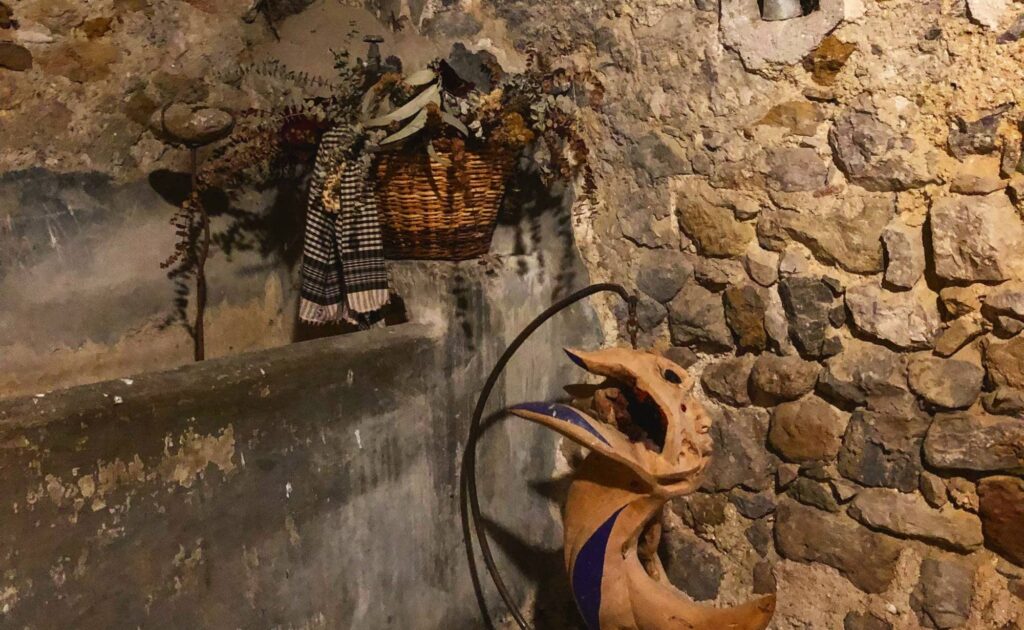
The Call House, located on a plateau, nestled on the slopes of Odèn mountain, in a privileged spot: like a viewpoint overlooking a large part of Catalonia, offering views of the pine forests of Solsonès, and at its feet, the upper Ribera Salada, with its rich variety of greens, from the dark, dense black pines to the more vibrant, lighter hues that autumn transforms into reds, oranges, and golds. A grand house where one can still sense a certain rustic charm, in the living room or by the communal fireplace, with all the allure of a traditional country estate that lived immersed in a life of great serenity, knowing how to make the most of the simplest things, giving them a magical and romantic air, using a language that, despite its roughness, was filled with sincerity and tenderness. A house, however, without water. One had to fetch it from the spring that would later be called “the devil’s spring,” and which now flows gently inside the entrance, at one end of a drinking trough, for anyone who wishes to taste it, directly or with a spout. That gift from God, the water, around which the legend was born. Tired of carrying water from the spring, that young maid, a servant, said she was fed up! All day long, up and down, laden with pitchers and buckets. That year, for Odèn’s main festival, when it seemed the sky wanted to roast the earth, for the Assumption of Mary in mid-August, the great hall of the Call House was bustling with relatives and guests, and she, still bringing pitchers of fresh water! Up the slopes and then back down the path with buckets and barrels dripping with water, also for the animals in the stables. So many donkeys, mules, and she-asses to water, and she, flushed with heat, her thoughts on the square, fixated on some dancing bachelor, dressed for the festival with light feet, whom she shouldn’t even think about. Not that year either. Because the water quickly ran out, and she had to go up to the spring and come back down, and help make dinner, and… –Blast it, master! What would it cost him to build a channel to bring the water home! She’d go up the slopes alone!– But no. The water was far away. She knew it well! She was fed up and bored of wearing down that path that kept her from going to the gathering, from dancing a few jigs. All for nothing! –Damn it!– Everyone in the square and she, still hauling water. As if she wanted to fill a basket that would immediately be dry. Burning like a chili pepper, she ached for the dance, and she climbed like a beanstalk, furious, about to throw pitchers and buckets down the stairs. –I tell you what: I would give myself to the devil just to have water at the foot of the house!– At that moment, a knock at the door, and a traveler appears who, –good heavens–, also wanted water. He says his throat is parched. A ill-tempered and stern man who asked the mistress about the maid’s distress. –Nothing, man, nothing. She’s upset about the dance and grumbling because the spring is too far. So much so that a moment ago she was shouting that she would give herself to the devil just to have water at the foot of the house!– An assertion the maid does not retract. She says she would gladly give herself if, before the end of the main festival, the spring’s gush flowed at the doorstep. –Deal!– replies the man. –Word accepted! Before the black rooster crows in the morning, you will have water inside the house!– And having uttered these words, the man leaves, saying he has much work to do. This makes the two women burst into laughter, as they prepare dinner and set the table, still talking about that strange man. –A crazy passerby–, says the mistress. –If he brought water home, I wouldn’t let you go to the dance alone, I’d surely accompany you!– Clatter of pots and pans on the stove. Dinner half-made, and from outside they hear a commotion of picks and shovels, mattocks, augers, rocks splitting, and mallets smashing them. The women listen intently, and it seems impossible! At the same time, the white rooster crows in the henhouse, and in the darkness of the night, a drawn-out, rough, and rusty voice says: –Work, move forward!– They open the window to the night, sprawling and dark, like a sweat-soaked blanket, and from the path leading to the spring, they hear the whimpering of the augers, the thunder of the mallets, and the groaning of splitting rocks. A great din under the stars that have fled the sky. As if the world had lost its mind! Stunned by the evidence, they try to keep their thoughts calm. A flock of thoughts circles their heads, and they feel their legs give way, like a slap, when the commotion in the thick darkness has awakened the henhouse. The red rooster crows, and that familiar voice, the voice of that strange man whom the maid had not even listened to when he promised to return, now cracked and even rougher, as if spitting embers of fire and making them hiss, red-hot, commands: –Let every man work for two!– It doesn’t matter, nothing matters! The earth smells damp, and inside the Call House, that house that climbs uphill, the two women no longer listen to each other. They share the silence, their heartbeats, and the blows of the mattocks in the black hole of the night. The mistress, however, does not lose her calm and, slyly, because she feels capable of beating the devil himself, orders the maid: –Go to the henhouse, grab the black rooster, and put its head in the trough.– That rooster, black as a crow, terrified, crows prematurely and abruptly stops the devil’s work. Before, gently, the water flows into the entrance; at one end of the drinking trough, and today through an artistic, cast-iron tap that Pep Call, the current owner, brought from Italy. A tap crafted with a head between a dragon and a strange, terrifying beast. Like a snapshot of the expression the devil must have made upon seeing himself defeated. Let the white crow, let the red crow, as long as the black one does not.
